Back in 1996, the world met Dolly the Sheep, the first mammal to be cloned from an adult cell. Born in Scotland, Dolly was a breakthrough that shifted cloning from science fiction into science fact. She wasn’t just a genetic curiosity—her birth proved it was possible to “copy” complex animals, sparking heated debates about ethics, medicine, and the very nature of life.
In the years that followed, scientists pushed further. Cows, pigs, mice and even horses were successfully cloned. Researchers began to imagine medical uses: cloning genetically identical animals for organ transplants, preserving endangered species, and even—controversially—replicating pets. While human cloning has remained firmly off the table (both legally and ethically), the technology has continued to evolve.
One of the biggest shifts in recent years has been cloning’s role in conservation. In 2021, the black-footed ferret—once thought extinct—was cloned in the United States from frozen cells. Similarly, scientists in Korea and China have cloned endangered dogs and monkeys. These experiments point to a tantalising future: using cloning not only to preserve rare creatures but to “de-extinct” lost species. The woolly mammoth and passenger pigeon are favourites in this discussion, but closer to home, the Tasmanian Tiger—officially declared extinct in the 20th century—regularly makes the shortlist of candidates.
So where are we now? Cloning remains a tool that’s still limited and expensive, but its possibilities are extraordinary. Gene editing technologies like CRISPR are now often paired with cloning research, opening up avenues not just for conservation, but for medical therapies and agriculture. Still, each leap forward comes with questions: should we, just because we can?
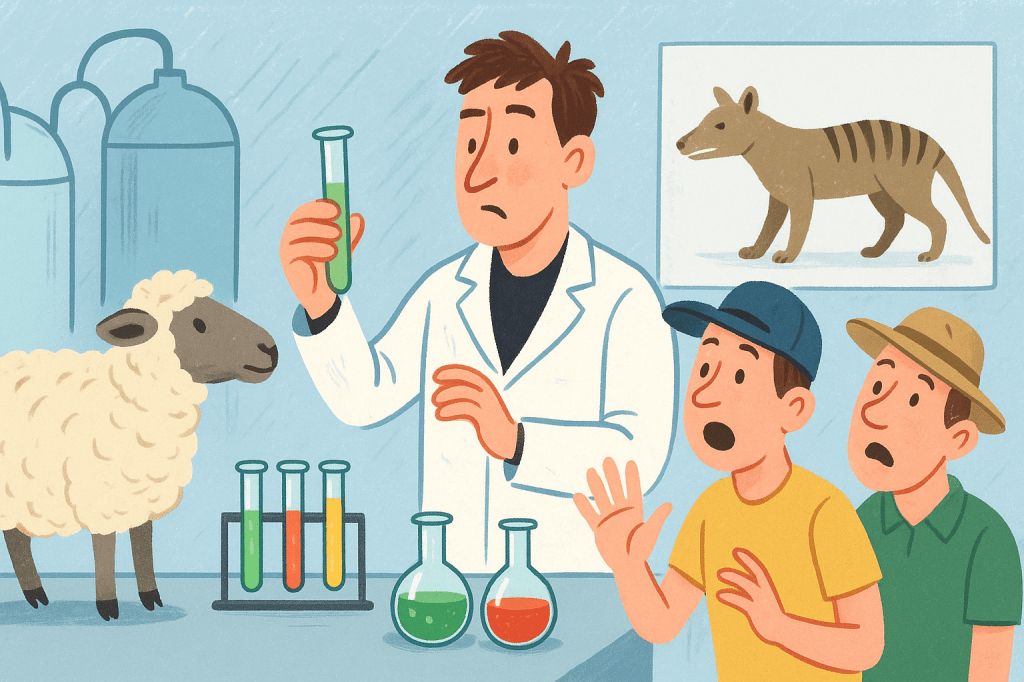
That question lies at the heart of countless debates—and, occasionally, at the centre of comedy. In my own Windy Mountain series, two octogenarians, Oodles and Wish-Wash, decide to have a crack at cloning a Tasmanian Tiger in Blokes Send in the Clones, the ninth book in the series. Their laboratory is less white coats and microscopes and more chaos, cricket gear, and confusion. The result is not a scientific triumph, but a hilarious misadventure that reminds us sometimes it’s better to leave cloning to the professionals.
 JOHN MARTIN'S TALES
Leave a comment