
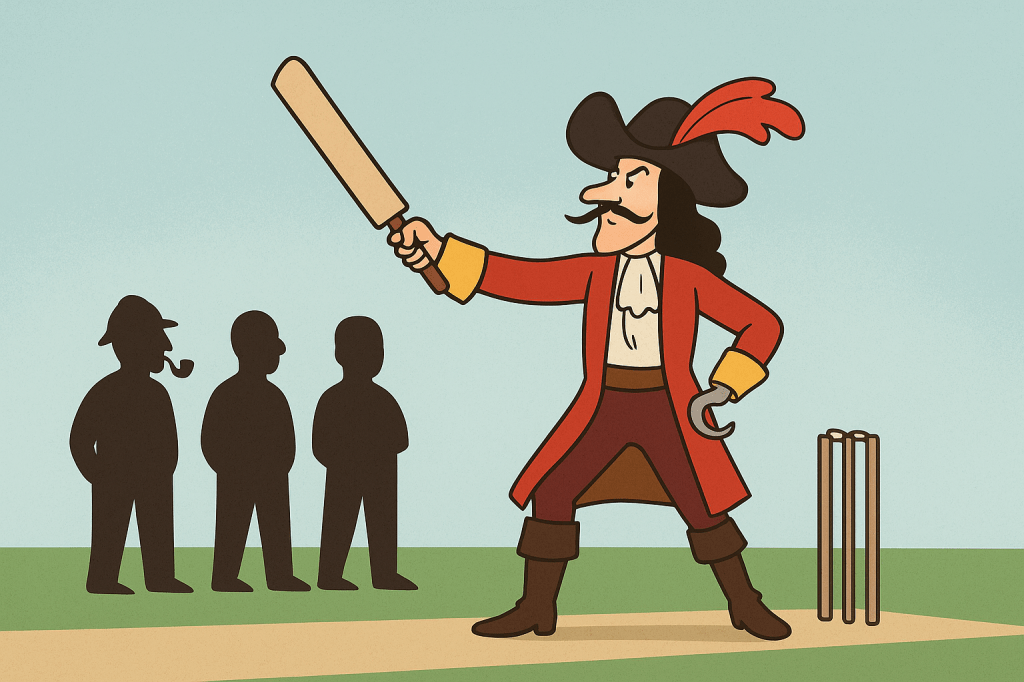
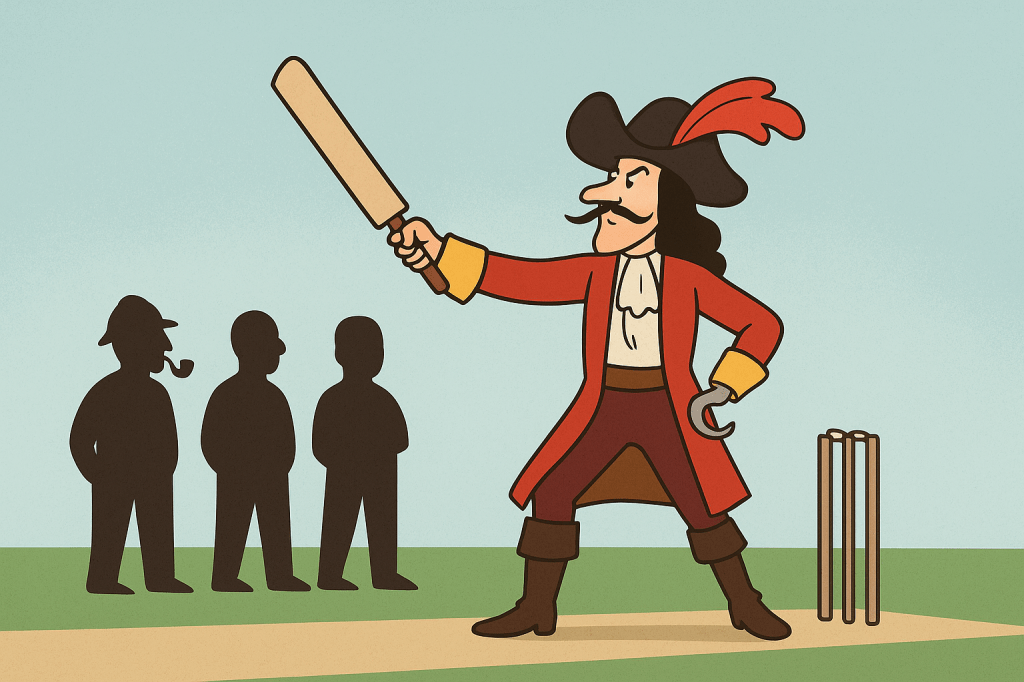
If you ever need proof that writers will do almost anything to avoid actually writing, look no further than J.M. Barrie’s amateur cricket team, the Allahakbarries.
With Australia getting the better of England in another Ashes battle, it feels like the right moment to remember that some of literature’s finest minds once tried their best to play the game — with mixed results and magnificent enthusiasm.
Formed in the 1890s, the Allahakbarries were a glorious collection of literary heavyweights who, on paper, should have been able to belt centuries between morning tea and lunch.
In practice, they were spectacularly hopeless. Barrie chose players not for their skill but because they were novelists, poets or playwrights he admired — a selection policy that would give today’s selectors heart palpitations.
Barrie himself, creator of Peter Pan, specialised in slow, drifting lobs sometimes described as “butterflies returning to the bowler.” His wicket-keeping was no fiercer than a Lost Boy’s bedtime. But he was cheerful and committed to the idea that cricket was far more fun when ability wasn’t required.
Arthur Conan Doyle, by contrast, could play. The man who gave us Sherlock Holmes was a strong batsman and a capable bowler. His most famous on-field moment came long before the Allahakbarries, when he bowled W.G. Grace — only for the great man to simply refuse to leave the crease. Grace declared himself not out and carried on.
P.G. Wodehouse, author of the Jeeves and Wooster novels, had cricketing talent in his youth but was swept into Barrie’s merry ranks, where enthusiasm counted for more than footwork.
He later described the team as “a collection of writers doing their best to look as if they belonged on a cricket field,” which may have been generous.
H.G. Wells of The War of the Worlds occasionally appeared, typically looking slightly startled, as if expecting Martians to land during the tea break.
A.A. Milne, creator of Winnie-the-Pooh, provided steadiness.
Their matches were less about winning than about conversation, sunshine and avoiding the manuscript waiting at home.
Footnote for the Barmy Army: The tale goes like this: in an 1882 match against Australia, Dr Grace noticed a batsman wandering out of his crease after assuming the ball was dead. Grace whipped off the bails and appealed. Out he went — or rather, Grace insisted he did. The crowd erupted, tempers flared, and the opposition, thoroughly unimpressed by Grace’s flexible interpretation of etiquette, responded by bowling with a vengeance. England collapsed spectacularly, and the shock defeat to Australia helped ignite the legend of the Ashes. Sound familiar?
 JOHN MARTIN'S TALES
Leave a comment