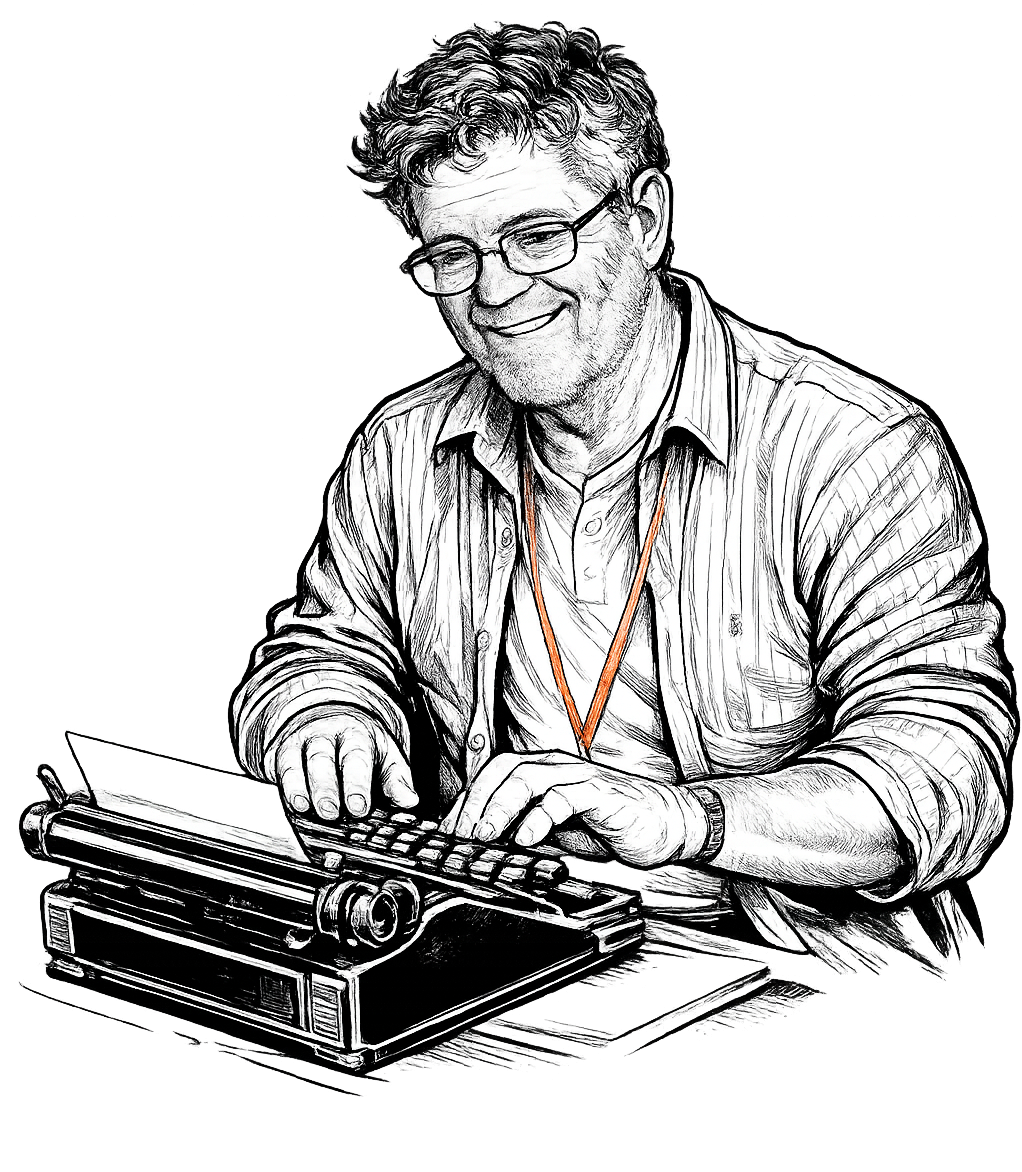
Every industry has awards. Actors have Oscars, musicians have Grammys, journalists have Walkleys.
Writers, supposedly, have plenty too — although most of us will never get within sniffing distance of one unless it’s on display in someone else’s lounge room.
So I’ve decided the time has come to celebrate the overlooked, underfunded and entirely fabricated category of honours I call the Imaginary Awards.
These awards require no entry fee, no black-tie banquet and no trembling acceptance speech broadcast to millions.
You simply win them by virtue of surviving another day at the keyboard. In fact, if you’re reading this, you may already qualify for several.
Let’s start with the Golden Teacup for Excellence in Procrastination, awarded to the writer who spends the largest number of hours “researching” on YouTube while claiming to be deep in character development. Bonus points if the research spirals from medieval agriculture to videos of unlikely animal friendships.
Another favourite is the Prestigious Paperweight for Most Dramatic Overreaction to a Minor Typo. Every writer knows the moment: spotting a stray apostrophe in something you’ve already published and immediately deciding you should probably move to a remote island under a new identity. Winning this award isn’t about the typo itself — it’s about the emotional commitment.
Of course, we can’t overlook the International Medal of Heroic Revision, given to those who bravely slash entire chapters without fainting. These recipients demonstrate remarkable resilience, calmly hitting delete while whispering, “It’s for the greater good,” like a surgeon amputating a limb in a war movie.
But the most coveted of all is the Lifetime Achievement Award for Finishing Something. Anything. A book, a short story, a blog post, even a grocery list that doesn’t trail off halfway. Finishing is the Everest of writing. Anyone who plants a metaphorical flag at the summit deserves applause, confetti and possibly a long lie-down.
The beauty of imaginary awards is that there’s no competition. No judges, no shortlist, no scandal because someone voted for their cousin. You can invent an award that suits your quirks, pin it to your mental trophy cabinet, and enjoy the glow for a full five minutes before reality reasserts itself.
Maybe that’s why these awards matter. They remind us that writing is hard, funny, frustrating, joyful work — and that we’re allowed to celebrate the small victories no one else sees.
So next time you wrangle a sentence into place or outwit a stubborn paragraph, go on. Present yourself an award. You’ve earned it.

 JOHN MARTIN'S TALES
Leave a comment