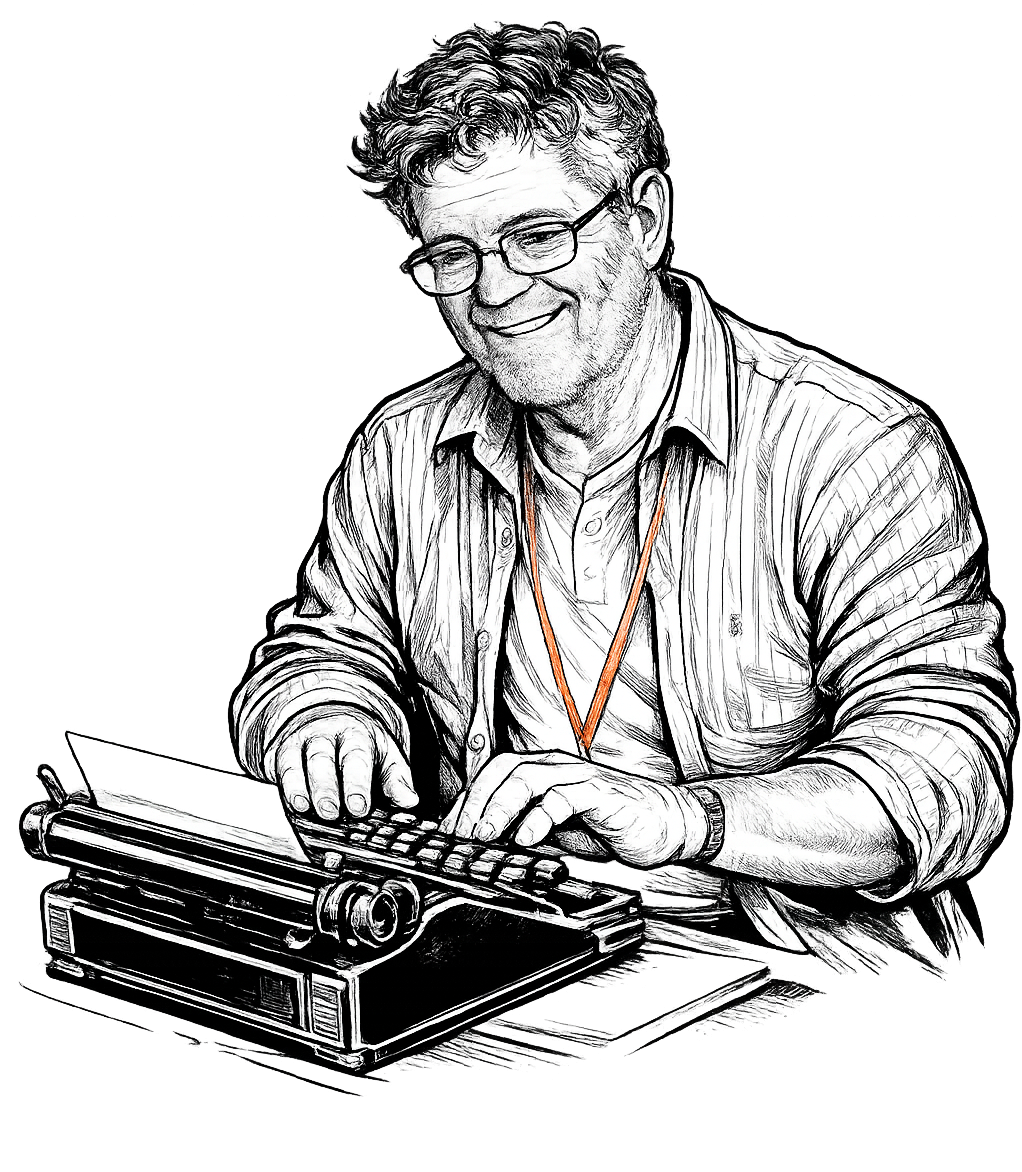
The first hint I might be a Time Lord happened in high school.
So I wasn’t panicked when my old mate Orville proudly showed me his new watch.
That’s Orville all over. One upmanship. I had just named more Doctors than he could.
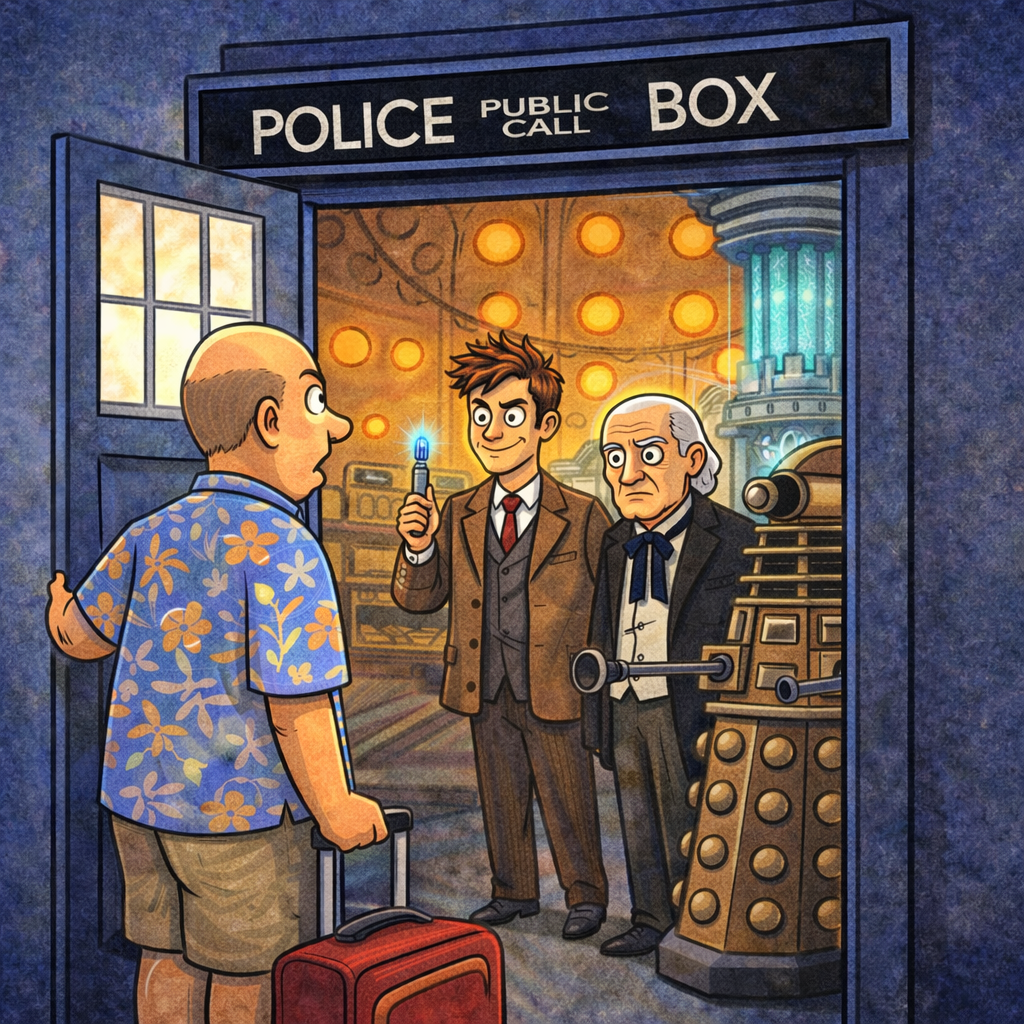
I stared at his watch face. It said 4:17. I glanced at my phone, which said 11:03.
“You’re either fast or slow,” I said.
“No, you’re the one who’s wrong this time,” Orville said. “I’m on Greenwich Mean Time.”
“Crikey, you really believe that potting shed of yours is The Tardis? You’re still in Australia, you twit.”
Orville shook his bald head. “That’s how much you know. Captain Arthur Phillip kept GMT all the way here on the First Fleet. Right up until he stepped off the longboat at Sydney Cove in 1788.”
“Yes, but he probably changed his pocket-watch in a hurry when he felt blazing sunlight when it ought to have been dark.”
Australia’s relationship with time has always been a bit… elastic.
When the First Fleet arrived, the continent had no unified system of hours or minutes.
Aboriginal timekeeping was beautifully tied to the rhythms of land and sky.
For decades afterwards, towns kept their own local time based on the sun.
Thus Australia had hundreds of unofficial time zones — one for every town centre with a well-meaning but inaccurate clock.
The sun said one thing and the vicar said another.
Launceston could be 16 minutes ahead of Hobart, which is how the north-south rivalry probably started. Hobartians have always hated trailing Launceston.
By the late 1800s, railways forced the states to standardise.
Today, Australia has three main time zones — Western, Central and Eastern — plus several variations created by such things as daylight saving rules in different states and territories, and now Orville’s GMT.
It gets more confusing.
In the late ’70s, when I was a newspaper reporter covering a council meeting in Campbell Town, a councillor complained that the four faces of the town clock all showed different times.
Try telling readers their district had found four more time zones.
Canberra’s always been different too.
Early residents gauged the hour not from a clock tower, but from the steam whistle atop the Powerhouse. When it whistled, it marked the end of a shift.
Imagine designing a national capital and forgetting the one thing every European town square has had since the Middle Ages: a clock.
But back to my brush with time.
It was around 1972 in a sweaty classroom at Rose Bay High School in Hobart.
The clock at the front had its own brand of sadism.
While the teacher droned on, the other kids would watch it creep towards five to the hour, hope rising that the bell — and freedom — was near.
Then the big hand would suddenly drop back to half past.
They’d sit there, trapped, not knowing whether the bell was seconds away or an eternity.
Not me though.
I loved maths.
To this day, I’m convinced the clock was doing my bidding. I’m at least part Time Lord.
If only I had a sonic screwdriver, me and my 28 assistants would still be studying algebra in that room. No, 29 assistants. I’d have to include Orville. Otherwise, I’d never hear the end of it.
 JOHN MARTIN'S TALES
Leave a comment