the SHORT STORY
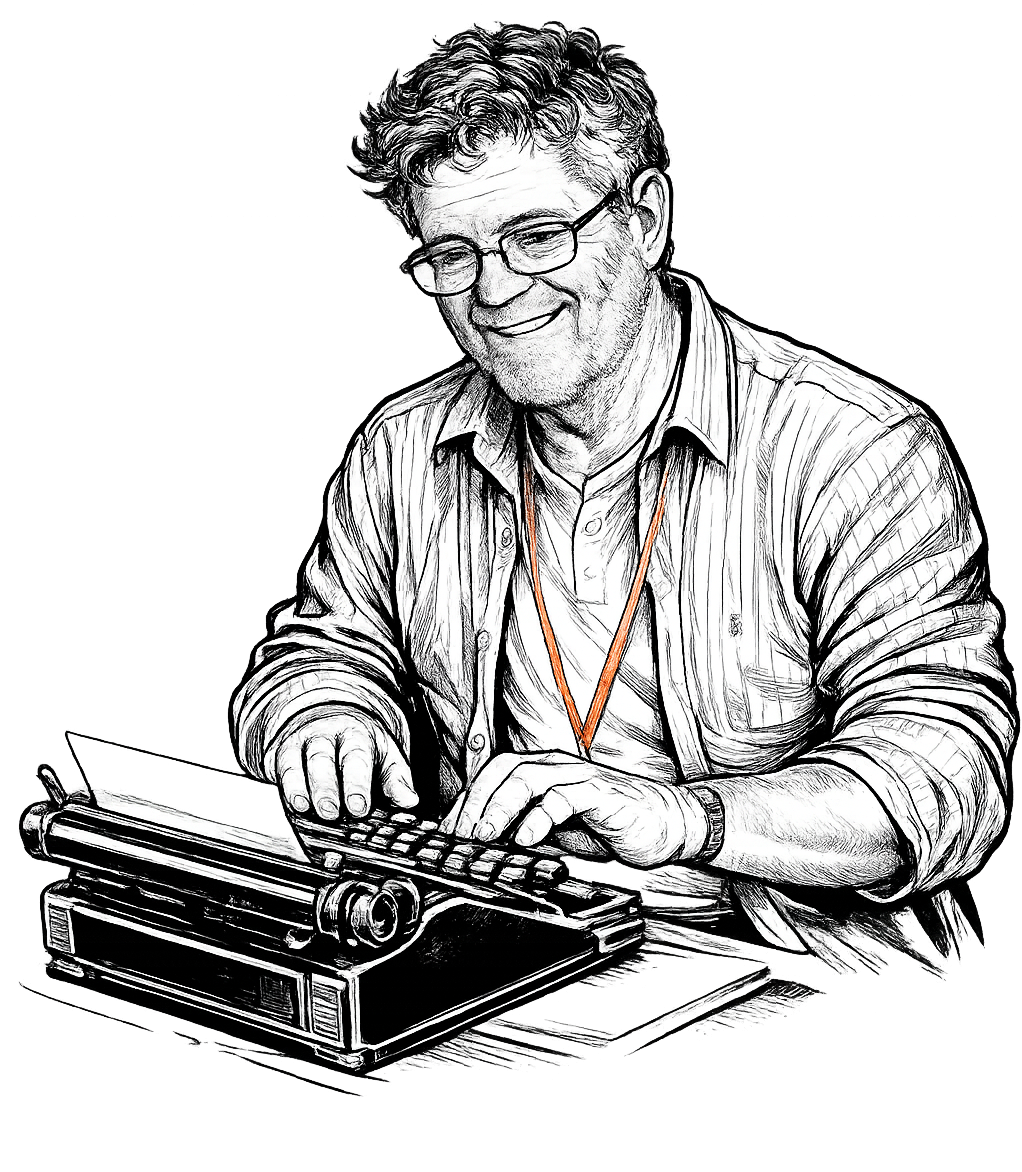
I’m a former newspaper journalist who is now free to be frivolous.
I have written 13 novels — the Windy Mountain series (9), the Funny Capers Downunder series (3) and a standalone. I cut my digital teeth with shorter bits and pieces.
I was born and raised in Tasmania and worked there for a while, but now I live in Canberra.
the LONG STORY
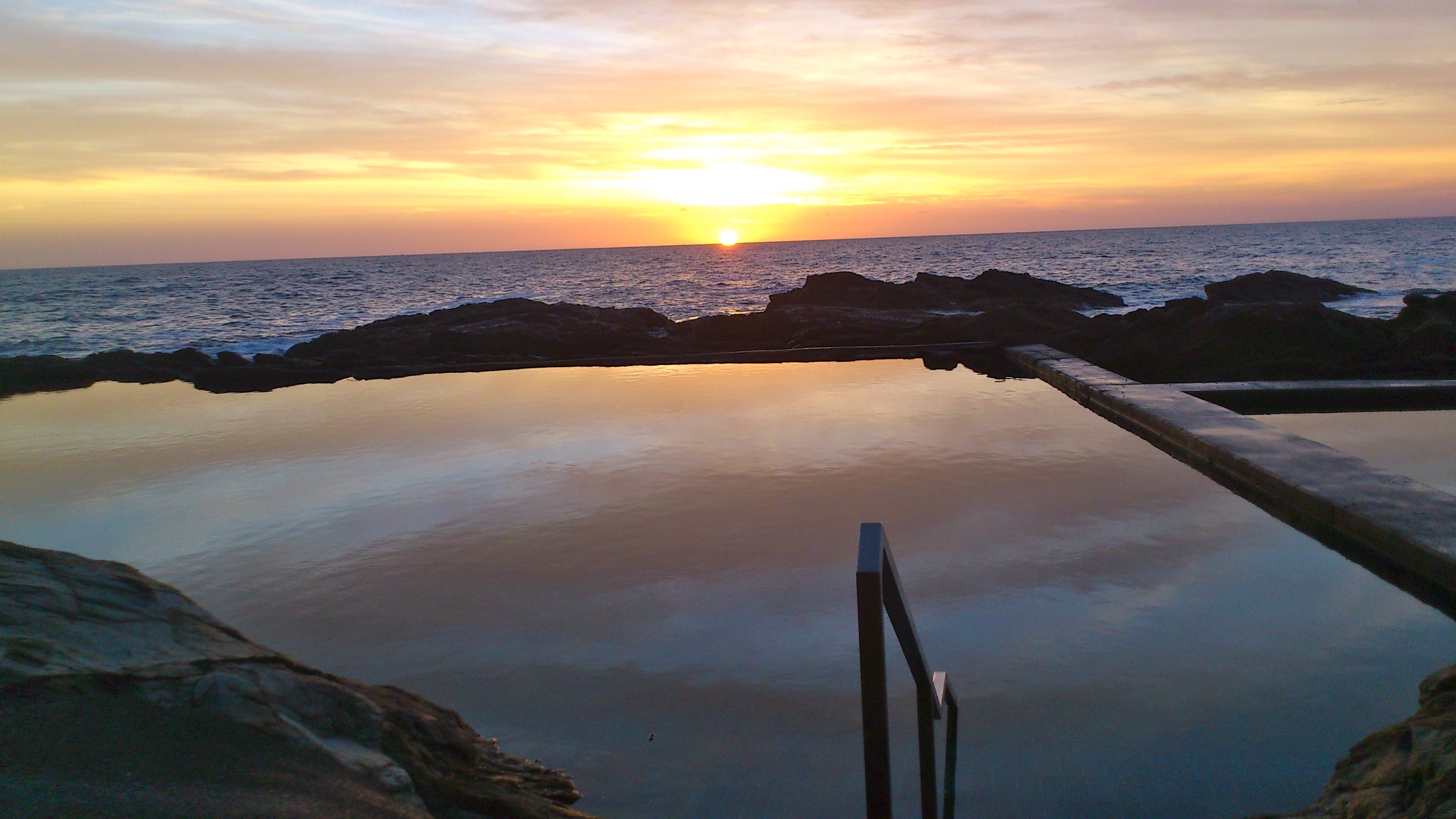
I took the photograph above at the Blue Pool in Bermagui on the New South Wales South Coast early on January 1, 2014.
A few people were around, but not as many as I had encountered a year earlier on holiday in Italy when I watched a spectacular fireworks display over the Venetian basin on New Year’s Eve.
My fortunes changed just a month later when I returned home and slipped in the hallway on transit to the fridge to get a cold beer on a hot day.
.
I never reached the fridge. I broke my leg (fibula and tibia).
If that had been all the damage done, I might have resumed my career in newspapers. That had begun in 1976 when I was barely 18 and had taken me to papers up and down the eastern seaboard of Australia and to Papua New Guinea.
But I contracted golden staph and had to endure five or six more operations, machines attached to me 24/7, more antibiotics and painkillers (administered both intravenously and orally) than you’d reasonably expect to have in a lifetime, months in and out of hospital and hospital waiting rooms and a hospital diet that left me anaemic. I eventually got back to work (determination kicked in) but I wasn’t the same.
Turns out I had a good excuse for slipping in the hall. Years earlier a neurologist diagnosed me with a neurological disorder. I wasn’t worried because it barely affected me. I didn’t even catch the name of the disorder. It sounded like a dish you’d order at a Greek taverna.
But I’ll never forget that neurologist’s parting words. “Be careful.”
Guess I wasn’t careful enough!
When I was cleared finally of the golden staph, I consulted another neurologist, who confirmed the earlier diagnosis.
When it was suggested I retire early on medical grounds, I didn’t think there was any point quibbling. It wasn’t the way I had planned to go out but c’est la vie.
We went to the beach the next Christmas. It felt so good to sink my plaster-free toes into the sand.
But I wasn’t up to going out on New Year’s Eve. I’m sure Bermagui has fine fireworks but I doubted they’d be as good as Venice’s.
Instead, I got up in the dark the next day and went down to the Blue Pool to watch the sun rise out of the Pacific Ocean.
I like to think that’s when I was reborn as a fiction writer.
First blood
Somewhere around home, I have a copy of The Karwyn Chronicle, which a mate and I produced for Christmas 1980 for 30 people, most Australians, and my future wife, who lived in a house in Trinity Rise in Tulse Hill in South London. We did a lot of typewriting, used Letraset stencilling for headlines and shelled out for a bit of photocopying. I only tell you this because it might have been my first foray into self-publishing. I can only hope that a libel lawyer never finds my copy though because it was all quite scandalous. If one of those Australians abroad is now rich and famous, the other bloke wrote the libellous stuff. OK?
My brush with someone else’s fame
In 1982 I worked as a sub-editor on the Post-Courier in Papua New Guinea. We had been working on computers and in clean, quiet offices in Australia for some years — but at the Post-Courier we stepped back to typewriters and hot metal. Many times I scribbled a headline on a piece of copy paper and handed it to the bare-foot copyboy to take to the print room, and he’d return a few minutes later shaking his head. Sorry, but the printers had run out of the letters L, P and T. Could I write something without those letters in it? That added a new skill set to my writing bow! Why am I telling you this? I’m just trying to give you some context. PNG was grappling with its fairly recent independence at this time, and there were many rewards ahead for the bright up-and-comers the country was producing. One such fellow we knew was a very bright mathematics student at the local university. One day he came to us and said he had packed in his studies to buy the PNG franchise for something called Microsoft software. Remember: we were still using typewriters and getting our international copy on telex machines. So what if our friend got in on the Microsoft ground floor?
A is for Apples

I actually wrote my first paperback novel in 1993. It was called Apples. I still have some copies in my garage. I self-published at a time when self-publishing was a dirty word. But I had baggage. I grew up in a household with a couple of my father’s old novel manuscripts around. He had submitted them to umpteen publishers before he gave up. I always thought bugger that for a joke. In 1993, I found myself with the time to go it alone. I was single and I had just stepped down after three years working as chief-of-staff of a daily newspaper in Tasmania. The job entailed managing reporters and photographers, and helping direct the news agenda for each day. It was very full-on. By choice, I returned to the sub-editor’s desk. Instead of working 70 hours a week, suddenly I was working 40. So I decided to have a crack at writing a novel to fill in my new spare time. I had a computer with word-processing software, the skills to write it, the skills to edit it, the dubious skills to design the cover, and the ability to oversee the printing. What I didn’t have were the skills to market it. My idea of marketing was to drive around Tasmania begging bookshop owners to take a few copies of the book. I wasn’t very good at this, and when I look at the book now I realise I didn’t really know much about writing novels either. The inverted pyramid style I had mastered on newspapers didn’t really cut it with a novel! This story has a happy ending though, if you care to keep reading.
The internet
I ventured on to the Internet for the first time in 1996. It was in Goulburn in New South Wales, where I went to work on the local newspaper, the Goulburn Post. The Internet then seemed a thing of wonder. My wife and I bought ourselves a modem and a long phone cord that we snaked from one end of the house to another. We soon found the trick was to start loading a page, leave it and go and get a cup of coffee, and when we returned the page would be visible. Maybe.
A year or two later
I was working as a sub-editor on the sports desk of The Canberra Times, and I was really annoyed whenever I heard about a student designing a home page as part of their studies at high school. I think I had The Fear of Missing Out long before the expression was coined. I shouldn’t have been annoyed. I started working life using a typewriter and by now I had worked on several different computer systems. But I thought I was missing out on exciting, new technology. In the late 90s, most Australian newspapers embraced the web in a very half-hearted way. The copy person was instructed to take the main stories of the day and put them on the newspaper’s web. I knew this wasn’t right. Who was the drongo who thought putting yesterday’s news up today was a good use for this technology. But there weren’t too many visionaries running the newspapers. They really thought publishing newspapers online would never catch up because no one would come at sitting in front of their desktop computers. I can’t tell you how many odd looks I got when I told people they had to start envisioning the portable devices that I thought would soon be developed, and would drive the revolution.
The Netwits
About 1998, a colleague and I decided to venture into this Internet frontier alone. I call it a frontier, but it was really geocities.com. We decided to teach ourselves how to build websites. We had to learn rudimentary html, which wasn’t so hard. We had used similar commands on various newspaper computer systems. We exchanged tips and blundered our way to make a reasonable go of it. The problem for me once I learnt how to drive it, was what content I would populate it with. What came to hand were various humour and parenting columns I had written for newspapers in recent years. Next thing I knew I was contacted by a bloke in the United States who was starting a group called The Netwits, a group of internet humour writers. At the height of my involvement, there were 140 of us — most from the US. We critiqued each other’s columns and articles, shared market opportunities, and bombarded plagiarists we found with nasty emails (I had some of my columns plagiarised by a weekly newspaper editor in Calgary, something I would never had known about but for the eyes of colleagues in that part of the world). We even did some work together. One job was writing humour content for WAP-enabled cell phones in Canada — something for people to read when stuck in traffic. I wonder why that technology didn’t catch on! Oh well. They paid in American dollars and we had a favourable exchange rate, so I earned a bit of drinking money.
2004: my first eBook
You heard it here first, folks. Before Kindles and iPads, .mobi and ePub, I did a PDF eBook called Adventure by flip-flops under the Southern Cross with independentbooks.com. From memory, I offered the content free for charity. I just wanted to say I had produced an eBook. Again, the content I provided were just old columns and scribblings I had lying around. In 2004, I packaged some of those same columns into a print-on-demand book called How Much Is That Scorpion in the Window? I followed this up with another POD novel called Major BS: A Top-Secret Mission in 2009.
A giant leap for mankind
When I was in grade six in Hobart, I remember watching Neil Armstrong step for the first time on to the moon. It was July 21, 1969, and the grainy vision came to us on a black-and-white television at the front of our classroom. I can’t say this event inspired me to become an astronaut or even a collector of moon rocks. But it did coincide with the awakening of my creative juices. I own up to writing bad poetry in 1969 and 1970, along with awful plays and wildly imaginative stories. In grades six and seven, my teachers encouraged me on my journey to the start of the writing learning curve. Unfortunately, it all stopped in grade eight. These were less enlightened days in the Tasmania education system and I guess the focus was preparing kids for bricks-and-mortar jobs. Writing books lived more in the airy-fairy zone. You were very unlikely to make a living that way. So for the final five years of my schooling, creative writing wasn’t part of the curriculum. We only learned about other people’s stuff, and some of it was on the stuffy side. I did well enough in English and history to get to the finish line but don’t ask me to do maths equations or science experiments or expect me to build something out of wood because those subjects were far from my strength. In 1976, my father told me the local newspaper was looking for a copyboy — and told me I ought to apply. I did, got the job and started my way up the ladder. I have no regrets. I learned about the mechanics of writing and the sanctity of deadlines (try telling your news editor he can’t have that story he’s waiting for because you have writer’s block, and see how that kicks along your career?). I also gained an insight into arenas I would never have been exposed to — crime, sport, politics, business, etc – and I got to travel a bit. This has all given me a deep understanding of how to draw character types and ideas. Still, I envy today’s young writers and wonder how things would have panned out for me in this era. There really has never been a better time to publish.
My new beginning
When I retired on medical grounds, I decided to explore digital book writing to fill in my time. I had to negotiate a steep learning curve but realised I already had words lying around I could use. Most of these were old columns I had written for various newspapers and had saved on floppy disks. But I also had a full manuscript for Apples. I treated this as a first draft for a novel I called Who Knew Tasmanian Tigers Eat Apples! This became the foundation for a whole series of books. Windy Mountain. This novel has now found its way into more than 80 countries. I’d consider that a happy ending, seeing as I found it so demeaning just trying to sell it in Tassie from the back of a green Torana.
And now
I heard the other day that slower typists are better writers than faster typists because they have more time to consider their words.
I was heartened by this because my typing has become slow. Really slow.
My affliction, spino cerebella ataxia, has affected both my mobility and my speech. As if walking wasn’t hard enough, life has thrown me a bad ankle.
The good news is none of my readers can see how slowly I write.
But that’s why I’m writing only one book a year these days.
 JOHN MARTIN'S TALES
Leave a comment