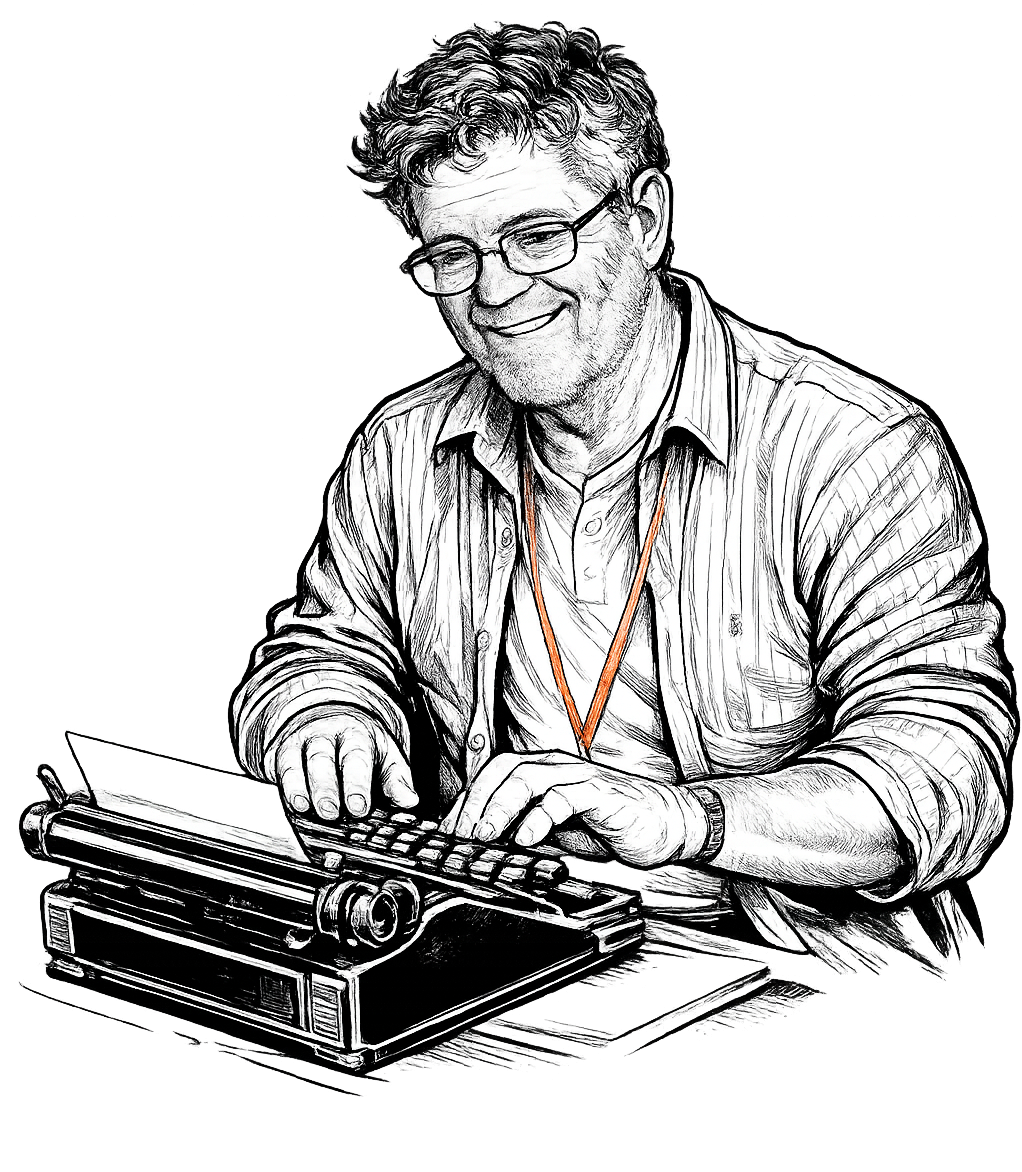
My most vivid memory of starting out at The Examiner newspaper in Launceston is not my first byline, nor even my first mistake. It’s a wall.
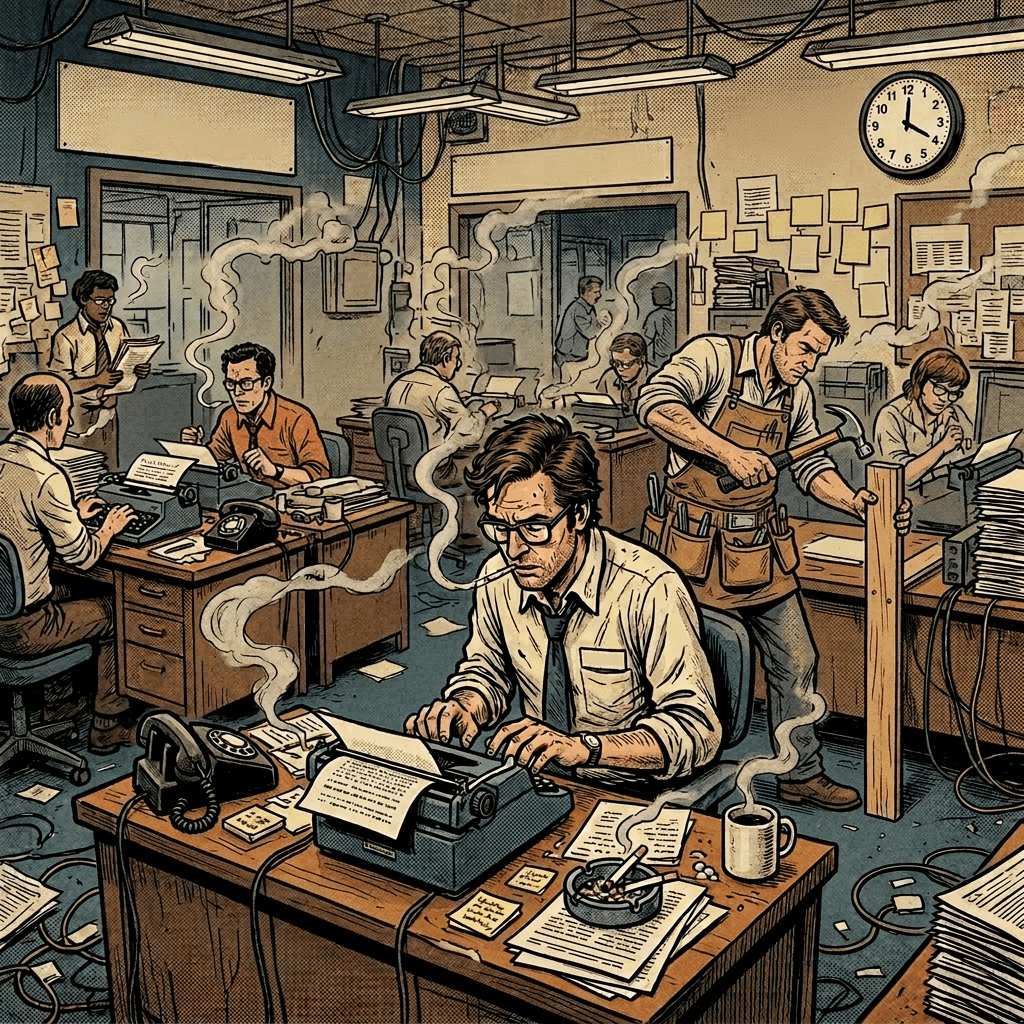
It came down without warning during a newsroom refurbishment in the late 1970s. Not a metaphorical wall — a real one. A temporary partition collapsed on to the chief-of-staff’s desk.
The C.O.S. at the time, Tom O’Meara, had just stepped away. Otherwise, the paper might have been advertising for a new chief-of-staff under tragic circumstances. As it was, the desk took the hit and Tom lived to tell the story, which is more than can be said for the wall.
It set the tone though. This was a workplace where even the infrastructure wasn’t entirely convinced of its long-term prospects.
As a copy-boy, I often was sent up to the creaky third floor to retrieve bound copies of past editions. Usually, the editor or news editor wanted something recent. But the bound copies went back more than a hundred years, and I was easily distracted.
I’d find what I was sent for, eventually. But not before drifting off into older stories — fires, council squabbles, long-forgotten scandals, great sporting moments. I even found a story written in 1964 by Michael Courtney, before he was editor. He panned The Beatles under a headline that screamed ‘No, no, no’ – when a lot of people were saying ‘Yeah, yeah, yeah’ on the eve of the Fab Four’s Australian tour. One rabbit hole led to another. Time got away on me.
The place had a reputation. The floor, it was said, wasn’t entirely sound under the weight of all those bound volumes, stacked and scattered without much regard for order. Whether that was true or not, it had one useful consequence: none of the senior staff were particularly keen to come up and check on me.
I knew it. They knew it. It worked for everyone.
Now and then, I’d be greeted on my return.
“Where the $%#* have you been, son? We were about to send a *&^%$ search party.”
Yes, of course they were.
That would have required volunteers prepared to venture on to a sagging third floor and risk going through it, along with several decades of back issues.
“Sorry,” I’d say. “They’re all over the place. Took me a while to find what you wanted.”
I left The Examiner in 1979 and came back in 1983. Over time, I worked my way up – until in 1989 I became chief-of-staff.
I never chased the job. I was simply sitting in the chair when the music stopped.
The editor made it clear on my first day he didn’t think I was the right man for it. With respect, he said, before giving me any respect at all. I took that to mean he’d been out-voted by someone higher on the food-chain. My other theory is he just had a long memory – and my third-floor disappearances hadn’t entirely faded.
I told him I’d be perfectly happy to return to the sub-editors’ desk.
I stayed — but on a knife’s edge.
I lasted three years, directing, coordinating and rostering reporters and photographers, all while maintaining a healthy awareness of my surroundings.
By then I’d learned two things: always keep one eye open for a bludging copy-person… and the other for any walls that looked like they might come down on an unsuspecting chief-of-staff.


Leave a Reply