Despite my great limitations as a player, I’ve followed Australian rules football since I was a kid.
And growing up in Tasmania, there was one game that had a special place in the mythology.
In 1960, Tasmania beat a Victorian Football League representative team for the first time, by seven points in front of more than 15,000 people at York Park in Launceston.
To a young Tasmanian football follower, those players were heroes.
Bob Withers was one of them.
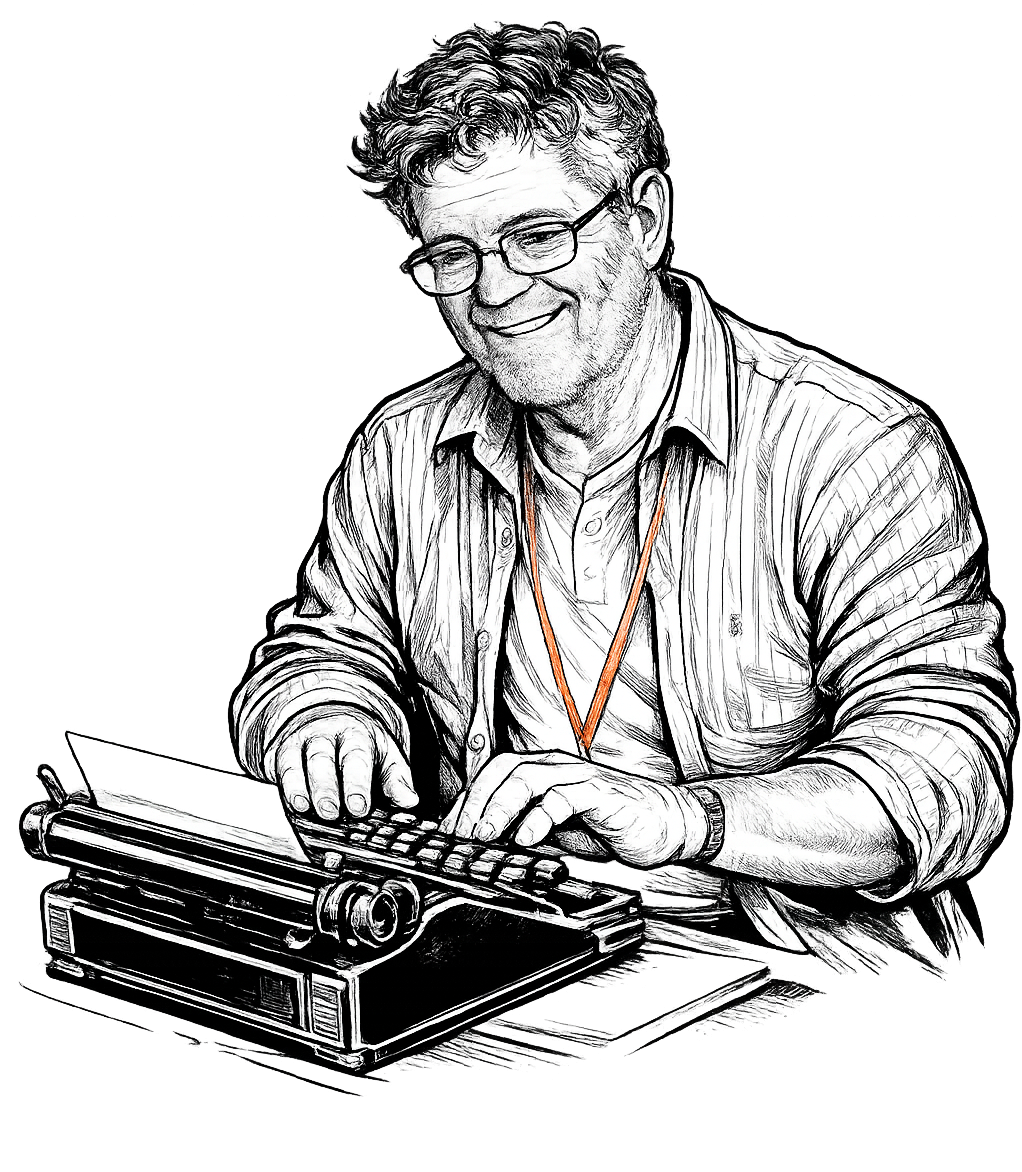
I never imagined that, 24 years later, I would meet him. And I certainly didn’t imagine that I would end up ghostwriting his newspaper column for him.
Which brings me to a rubber duck.
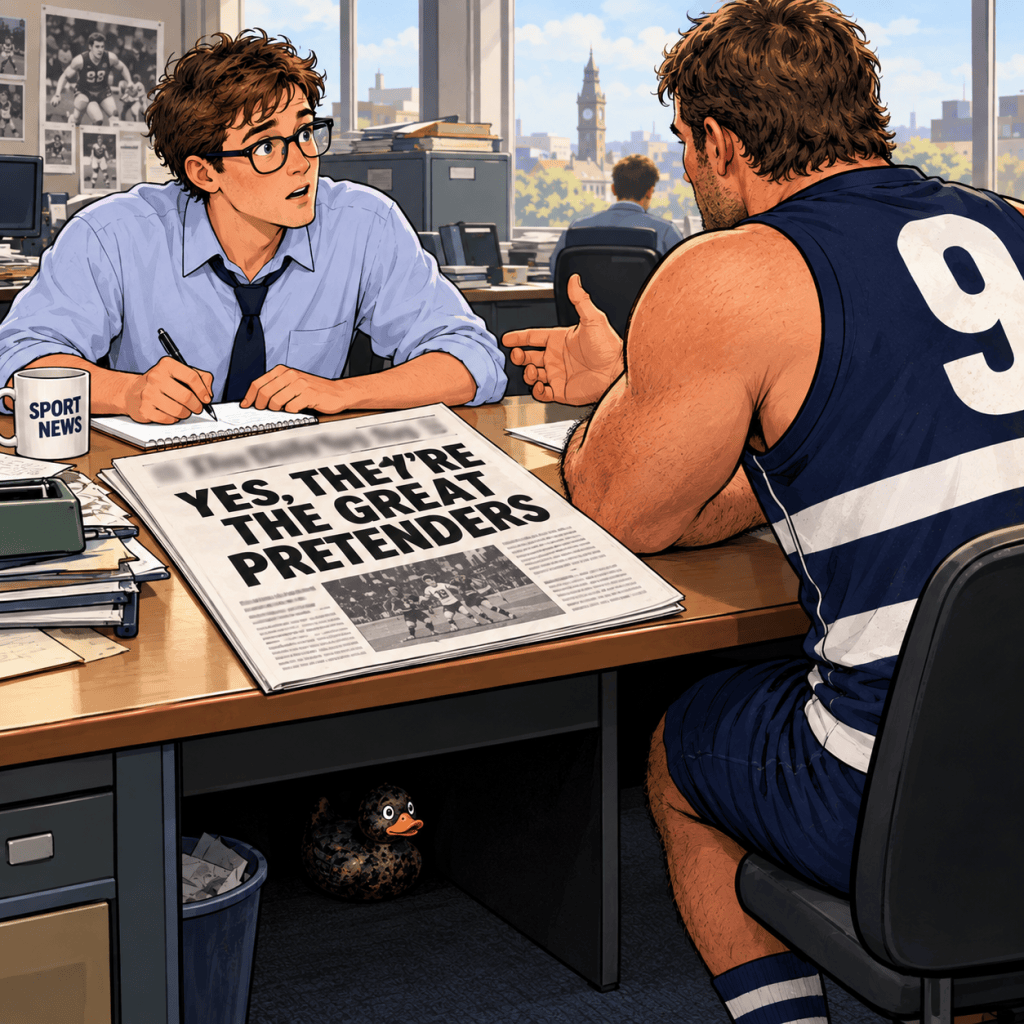
A blackened, overcooked rubber duck, to be precise.
I wonder if Bob ever found out who sent it.
Sigh.
This footy legend died last week, aged 92, so I’ll probably never know.
Let’s backtrack to June 13, 1960, the day the Big V was rolled.
I was not yet two years old.
Bob arrived at the York Park gate carrying, I imagine, a bag full of his playing kit.
But he didn’t have a pass to get in.
That’s because he had been drafted into the squad late when other players withdrew through injury or unavailability – and hadn’t even been issued one.
So he had to pay to get in. The gatekeeper insisted.
In the days before interchange, Bob was named on the bench, which was a surprise to some experts and probably the Vics.
To be fair to the selectors, he had only just arrived in Tasmania to take up the captain-coach job at North Launceston, so they didn’t yet appreciate how good he was.
But he had already played 137 games with blue-collar VFA club Port Melbourne, including a premiership.
More pertinently, he had represented the VFA against the VFL and had carved up the opposing centreman.
Victoria’s side in 1960 was not the strongest possible combination. The principal VFL representative side was playing South Australia in Melbourne on the same day, so the team sent to Launceston was effectively a second-string VFL representative side.
But it was hardly a bunch of nobodies
The line-up included players from Carlton, Collingwood, Essendon, Geelong, Hawthorn, Melbourne, Richmond and St Kilda. It included names such as Murray Weideman, Billy Goggin and Verdun Howell.
Bob came on in the second half and had an influence on the half-forward flank, kicking two goals.
Victoria hit the front with about 15 minutes gone in the last quarter with its long kicking and high marking.
But Tasmania fought back to win 13.13 (91) to 12.12 (84).
Now fast-forward to 1984.
I was a 25-year-old sports reporter coming face to face with one of those heroes.
Built like a proverbial little brick s***house, with a nose that suggested it had been broken once or twice, he usually came into the office for a half-hour chat, after which I’d write his column.
We never hid the fact it was ghostwritten. Bob got the big byline with his picture, and it said at the end: WITH JOHN MARTIN.
The column that brought on the rubber duck was one previewing the intrastate carnival in Hobart between the TANFL (south), NTFA (north) and NWFU (north-west) over the Queen’s Birthday weekend.
The regional rivalry in Tasmania has always been fierce in all kinds of areas.
But it was especially acrimonious in football at that time.
The perception was that the Hobartians were going on a power grab, to the detriment of the north and north-west.
They did give the football world Peter Hudson. But Darrel Baldock came from our end of the island. Fair’s fair.
Bob outlined in the column how we, the north, could beat the cocky southerners.
The sub-editor wrote a catchy headline for it:
Yes, they’re the great pretenders.
Well… we got serious egg on our face, didn’t we?
On Monday, June 11, the TANFL smashed the NTFA by 116 points. It was embarrassing.
A few days later the ‘dead duck’ arrived at the office, addressed to Bob.
Second thoughts, it might have been meant to depict a crow.
Well, we did have to eat crow.
BOB WITHERS’ FOOTY HIGHLIGHTS
137 games for Port Melbourne in the VFA from 1951 to 1959, including the 1953 VFA premiership. He also represented the VFA from 1957 to 1959.
165 games for North Launceston from 1960 to 1967, all eight seasons as captain-coach, with NTFA premierships in 1961 and 1963.
15 games for Tasmania, including two as captain. He was part of the 1960 team that defeated Victoria for the first time.
Named All-Australian in 1961 after the Brisbane National Carnival, the only Tasmanian selected that year.
Won the Lefroy Medal in 1963 and later coached Launceston, Devonport and East Devonport, adding another NTFA premiership with Launceston in 1969.
Assistant coach at Essendon in 1970 under Jack Clarke.
JOHN MARTIN’S FOOTY LOWLIGHTS
1966: Sister Bernadette, aka the High-Flying Nun, teaches me to deliver the perfect dropkick in Grade 3 at Our Lady Full of Christians, a small Catholic school in Newnham. People have been calling me a dropkick ever since.
Also my first game.
Personal stats: 0 kicks, 0 handballs.
1967: Second game.
Personal stats: 1 kick (a free for a push in the back, which makes no sense when you consider I was the polar opposite of a ball magnet), 0 handballs.
Third game.
Personal stats: 0 kicks, 0 handballs.
Retired from career mentally hurt.
1984: Inspired by meeting a legend, came out of retirement to play in a social game.
Same old story.
Personal stats: 0 kicks, 0 handballs.
Went back into retirement again. Gutted.


Leave a Reply