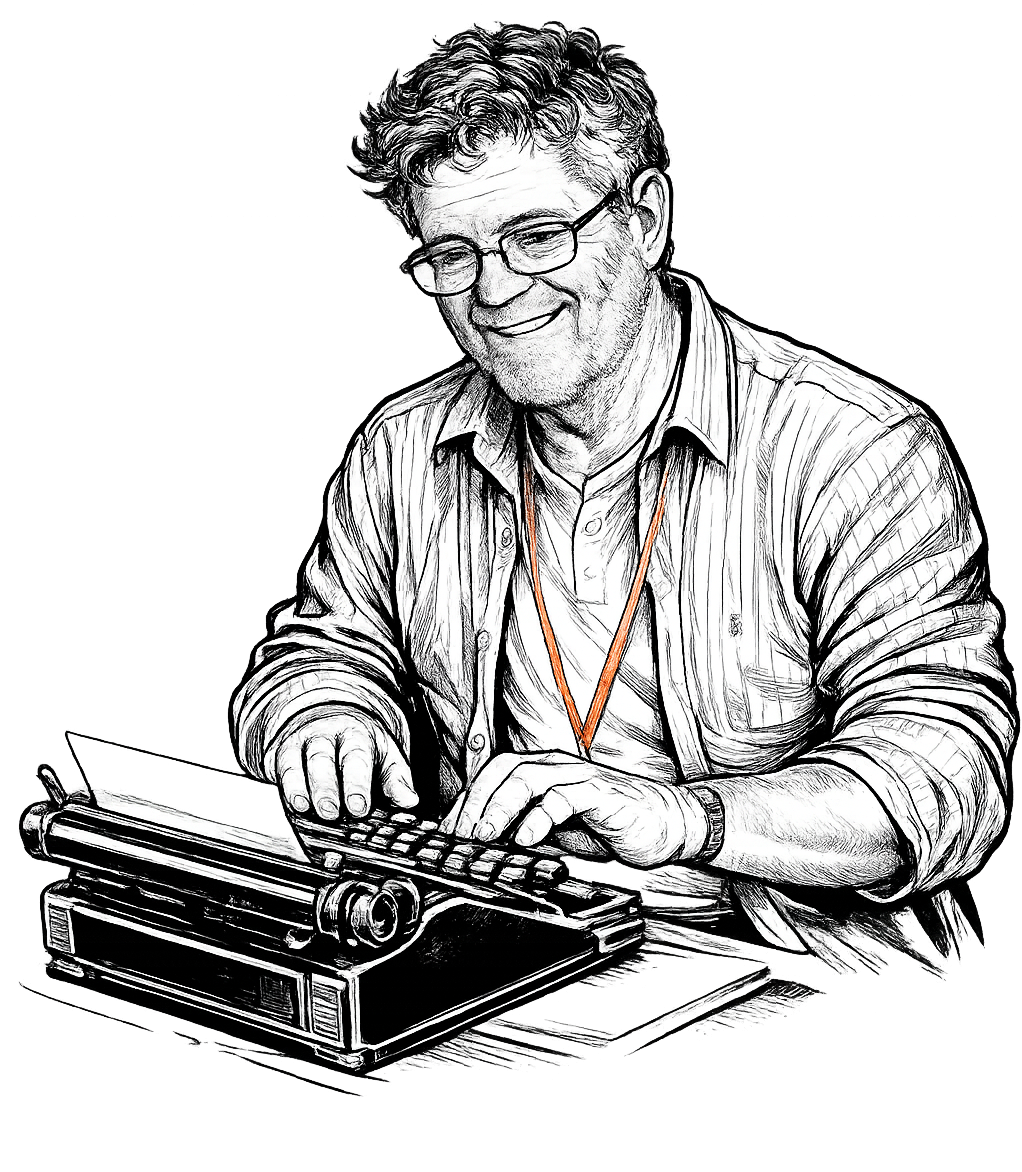
Another one from the archives, while I try to work out my seating arrangements.
For those readers who are just dying to sit down, I have good news.
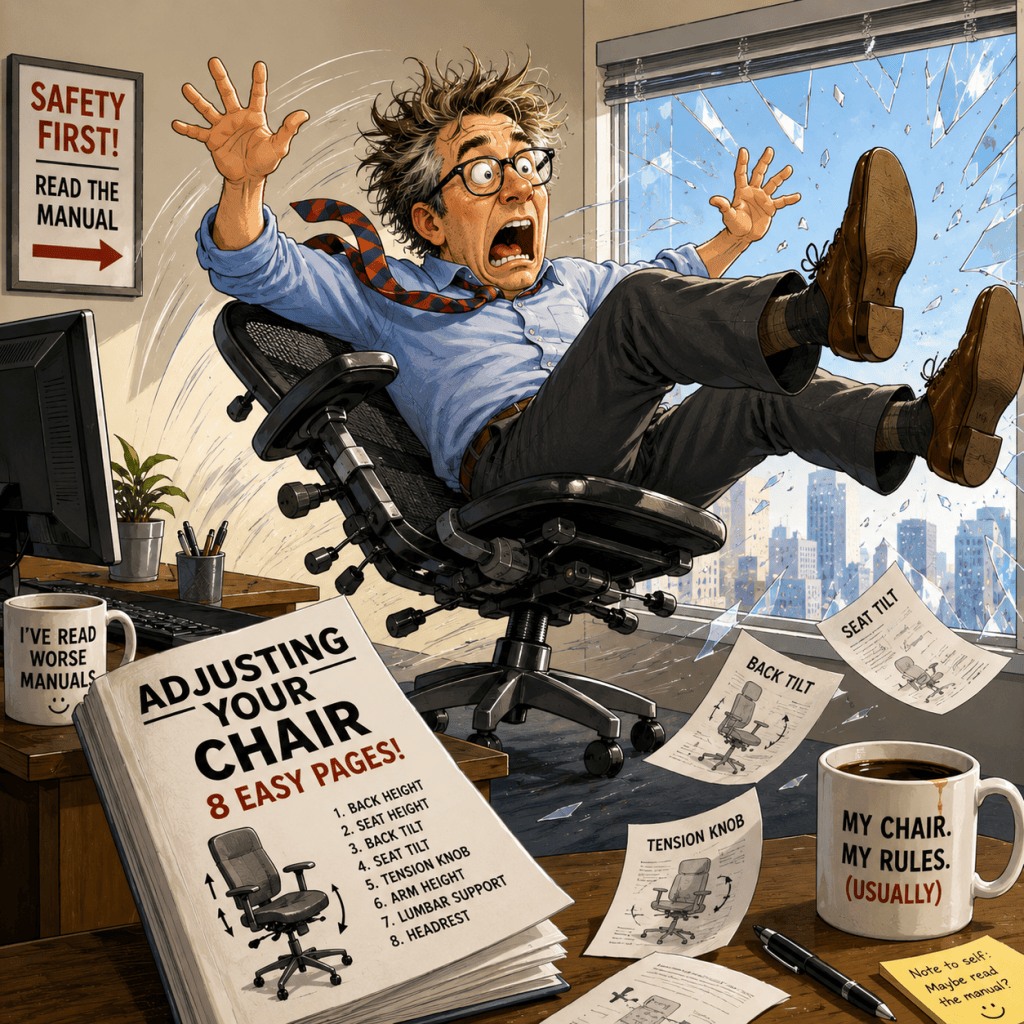
I recently stumbled across an eight-page manual titled Adjusting Your Chair.
Apparently someone has finally worked out how chairs work — welcome news for those poor souls who secretly enjoy sitting down but have been too embarrassed to attempt it in public for fear of doing it incorrectly.
But who, honestly, is going to read an eight-page instruction manual before sitting at their desk?
Nobody reads manuals, do they?
Well, perhaps fighter pilots do before taking off. The rest of us certainly don’t. Not for computers, mobile phones or even cars. Manuals are what you reach for only after you’ve pressed the wrong button, broken something expensive and exhausted every other option.
I learnt to sit on chairs the traditional way — by trial and error. I fell out of my high chair as a baby and off my bar stool as a young adult. Experience is a wonderful teacher.
When I started work there were only two types of office chair: grey ones and brown ones. Neither could be adjusted, reclined, tilted, raised or lowered. They simply sat there, quietly supporting generations of journalists.
The desks didn’t move either.
If your chair felt uncomfortable, you wriggled.
If your back hurt, you stood up for five minutes.
And if the boss caught you standing around too long, he’d tell you to “bloody well sit down and do some work.”
He never asked whether I’d completed my Chair Adjustment Certificate.
To be fair, this modern chair is no ordinary chair. It boasts back-height adjustment, back-tilt adjustment, seat-tilt adjustment and a tension knob.
My toaster has a lever and adjustment knob too, but it never came with an eight-page guide explaining how to make toast.
Mind you, I did eventually discover that using a fork to retrieve burnt toast wasn’t one of my better ideas.
I suspect the real purpose of the chair manual isn’t to help employees at all.
It’s there so that if someone pulls the wrong lever, launches themselves backwards through the office and disappears through the skylight, the boss can shrug when the workplace safety inspector arrives.
“The instructions were all there,” he’ll say. “It’s hardly my fault they didn’t read them.”
I do wonder how thick the manual is for the boss’s chair.
Bosses always seem to have much bigger chairs than everyone else.
I’ve never understood why.
It’s not as though they necessarily have bigger bottoms.
They spend half their lives sitting in meetings in other people’s offices anyway.


Leave a comment